Click to earn websites...


Showing posts with label Hardisk. Show all posts

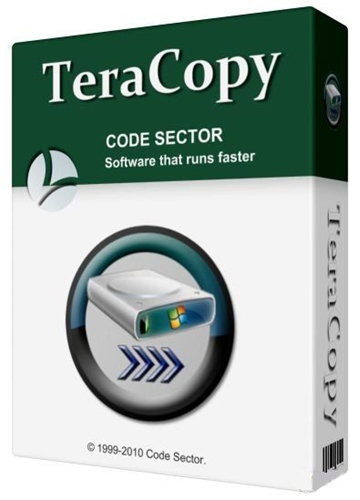
TeraCopy 2.27


TeraCopy is a compact program designed to copy and move files at the maximum possible speed, providing the user a lot of features:
  • Copy files faster. TeraCopy uses dynamically adjusted buffers to reduce seek times. Asynchronous copy speeds up file transfer between two physical hard drives.
  • Pause and resume file transfers. Pause copy process at any time to free up system resources and continue with a single click.
  • Error recovery. In case of copy error, TeraCopy will try several times and in the worse case just skips the file, not terminating the entire transfer.
  • Interactive file list. TeraCopy shows failed file transfers and lets you fix the problem and recopy only problem files.
  • Shell integration. TeraCopy can completely replace Explorer copy and move functions, allowing you work with files as usual.
  • Full Unicode support.
Changelog:
  • Added: ‘Remove other’ to remove non-selected files from the list [Pro].
  • Added: Better handling multiple copy processes.
  • Added: Multiple retries to delete source files and folders after moving.
  • Added: Tray notification when adding files to the existing process.
  • Fixed: Problem with some non-Latin filenames.
  • Fixed: Copied files now have a correct creation time.
  • Added: WaitBeforeMinimize option to ini file.
Download: TeraCopy 2.27 | 2.8 MB (Freeware)

How To: Detect what process is thrashing your hard drive


Every once in a while you notice that your hard drive is working extra hard for what seems like no reason.  A background process has taken your hard drive hostage, forcing it to thrash loudly as it struggles to keep up with the high rate of reads and writes.  Your computer responds slowly as the process overloads the physical limitations of your drive. What are you to do?
The solution is simple, although a little tricky at times: identify and stop the process that is killing your drive.  There are two methods and tools that you can use to identify the process.
Method 1
  1. Click on the Start Button and key in perfmon.exe /res and hit Enter. This should launch the Resource Monitor on Windows 7 and Windows Vista.
  2. On the overview screen click on the Disk section down arrow to see a list of all processes and the files they are writing or reading from your drives.
  3. Click on the Read, Write or Total headings to sort all disk operations to identify which process and file is currently using the disk the most.

Method 2
  1. Visit Microsoft’s Sysinternals web site and download Process Explorer.
  2. After you have started Process Explorer, click on the View menubar item and then Select Columns.
  3. Click on the Process I/O tab and check:
    • Reads
    • Read Bytes
    • Writes
    • Write Bytes
  4. Hit OK.
  5. You will now see the new columns listed for each process. To identify what process is killing your hard drive, just look for the process with the highest number of Reads or Bytes.